http://www.theatlantic.com/magazine/archive/2012/07/why-women-still-can-8217-t-have-it-all/9020/

Zim Women Can is a blog by Grace Chirumanzu, a young and energetic female journalist in Zimbabwe. It looks at Zimbabwean women who have made a name for themselves in society, women who are fighting for the rights of other 'inferior' women and children and women who are working hard to be recognised in society. It inspirers women to find their place in patriarchal Zimbabwe and Africa.
Wednesday, June 27, 2012


Muchuchuti dreams of Moscow 2013
BY GRACE CHIRUMANZU
Dressed attractively in a red sleeveless top and tight short, she walked confidently like a model and a cool breeze blew her long black hair just like in the movies. With her confidence and an ideal height of 1.85m anyone can be forgiven for thinking she is the current Miss Zimbabwe beauty queen.
Her dream is not anywhere close to that ramp for a glittery crown. Charity Muchuchuti dreams of playing at the 2013 International Rugby Board women’s World Cup in Moscow. The national sevens teams both men and women are set to compete in the 2013 IRB Sevens Rugby World Cup Africa qualifiers to be held in Morocco from 27 to 29 September.
“Going to the World Cup will be a great thing for me
and the team,” said Muchuchuti. “People believe women can’t do anything, they
cannot imagine a women’s team playing good rugby. Sometimes it sees challenges
in getting sponsorship because people think we are not serious. But if they can
give us a chance and offer their support we will prove to them that we can do
it.”
She has fallen in love with the sport since 2008 when the national women’s rugby team coach, Abigail Govere, recruited her from basketball.
“I managed to get the basics of passing the ball and the rugby rules in a week. I did not struggle that much because being a sports person one always learns to adjust. What matters is the physical fitness,” she said.
Muchuchuti who also plays for Varsity Leopards during the basketball season has made a name for herself in the rugby field together with fellow basketballers. These include former national basketball women’s team captain, Abigail Gondo, Varsity Leopards captain Lucia Marisamhuka and Patience Chinhoyi.
In basketball a player has the freedom to pass the ball to a player in front but it is a different story in rugby. A player is only allowed to pass the ball to the back. One is only allowed two steps before shooting the ball in basketball whereas in rugby one can run all the way for a try.
How did Muchuchuti and her teammates manage making the changeover from bouncing the ball in a sport where contact will get a player penalised for a foul to fitting in an aggressive contact sport?
“The biggest challenge I then had was telling my mind that now I am playing rugby, no more passing in front. I found myself passing the ball in front at most times and I would sometimes do two steps and freeze before realising Oh! I can sprint all the way, it’s not basketball,” she laughs.
“I joined rugby not knowing that sometimes you can get hit and have a concussion for a week or so. On my first tour in Zambia I got hit in the first two minutes of the game and I passed out. I only remembered being carried to the ambulance and never completing that game. Ever since then I have learnt to be on the offensive rather than defensive.”
The Old Hararians and Pangolins prop no longer hesitates to make a tackle. In fact, she admits she has found satisfaction in making tackles.
“My mother has only watched me play once; she says she does not like watching me hurt other people’s kids. I have found great joy in making tackles –hitting before I am hit- it makes me feel like I am in control,” she said.
“One has to be strong, confident, train hard and trust the next person she is going to play with to be a good rugby player. With confidence one can do wonders in a rugby field, fear does not take anyone anywhere. If one is intimidated by my height before playing the game then she will play the whole game avoiding contact with me, which should not be the idea.”
Dressed attractively in a red sleeveless top and tight short, she walked confidently like a model and a cool breeze blew her long black hair just like in the movies. With her confidence and an ideal height of 1.85m anyone can be forgiven for thinking she is the current Miss Zimbabwe beauty queen.
Her dream is not anywhere close to that ramp for a glittery crown. Charity Muchuchuti dreams of playing at the 2013 International Rugby Board women’s World Cup in Moscow. The national sevens teams both men and women are set to compete in the 2013 IRB Sevens Rugby World Cup Africa qualifiers to be held in Morocco from 27 to 29 September.
+during+the+inaugural+Spar+Sevens+tournament.jpg) |
| Charity Muchuchuti with ball |
She has fallen in love with the sport since 2008 when the national women’s rugby team coach, Abigail Govere, recruited her from basketball.
“I managed to get the basics of passing the ball and the rugby rules in a week. I did not struggle that much because being a sports person one always learns to adjust. What matters is the physical fitness,” she said.
Muchuchuti who also plays for Varsity Leopards during the basketball season has made a name for herself in the rugby field together with fellow basketballers. These include former national basketball women’s team captain, Abigail Gondo, Varsity Leopards captain Lucia Marisamhuka and Patience Chinhoyi.
In basketball a player has the freedom to pass the ball to a player in front but it is a different story in rugby. A player is only allowed to pass the ball to the back. One is only allowed two steps before shooting the ball in basketball whereas in rugby one can run all the way for a try.
How did Muchuchuti and her teammates manage making the changeover from bouncing the ball in a sport where contact will get a player penalised for a foul to fitting in an aggressive contact sport?
“The biggest challenge I then had was telling my mind that now I am playing rugby, no more passing in front. I found myself passing the ball in front at most times and I would sometimes do two steps and freeze before realising Oh! I can sprint all the way, it’s not basketball,” she laughs.
“I joined rugby not knowing that sometimes you can get hit and have a concussion for a week or so. On my first tour in Zambia I got hit in the first two minutes of the game and I passed out. I only remembered being carried to the ambulance and never completing that game. Ever since then I have learnt to be on the offensive rather than defensive.”
The Old Hararians and Pangolins prop no longer hesitates to make a tackle. In fact, she admits she has found satisfaction in making tackles.
“My mother has only watched me play once; she says she does not like watching me hurt other people’s kids. I have found great joy in making tackles –hitting before I am hit- it makes me feel like I am in control,” she said.
“One has to be strong, confident, train hard and trust the next person she is going to play with to be a good rugby player. With confidence one can do wonders in a rugby field, fear does not take anyone anywhere. If one is intimidated by my height before playing the game then she will play the whole game avoiding contact with me, which should not be the idea.”
Wednesday, May 23, 2012
The Queen of motor rally
 |
| Laureen Marufu with the other drivers. |
Stepping into the reception one is welcomed by soothing soft music, with the black leather couches calling for company. Through to the elegant garden, Mother Nature has a special relationship with sculptures to give a beautiful relaxing mood at Amara’s Health Spa in Harare’s upmarket Borrowdale.
Several rooms are bracing for activities such as various full body massages, steaming baths, body scrubs, manicures, facial treatments among others. But in a separate office furnished with a stylish fish pond table sits the Spa’s lady boss, dressed in a black top that reveals the black rose tattooed on her left arm, a fitting grey skirt with her long black hair combed one side.
Is she the current Miss Tourism Zimbabwe? No, though she may fit perfectly in that shoe. It is Zimbabwe’s top female motor rally driver –Laureen Marufu.
“I am a go-getter,” she says.
Marufu (35) began her career in motorsport three years ago. She impressed many by finishing ninth in her debut Toyota Challenge Rally in 2010. She moved three places up the following year to finish sixth. But the opening event of the African Challenge Rally was an unfortunate stage for her this year. She crashed out of the competition after her Toyota Runx hit a tree at Donnybrook the first day of the three-day show.
“It was really nice,” Marufu gives a naughty giggle as she describes her first crash in Norton.
“The car kept rolling and all I could remember in my head was stop I need to go! Stop I need to go!” It was not even like oh my God I am going to die; I needed to keep on moving. When the car stopped I was unconscious and started hearing my navigator’s voice “Laureen Laureen” so I became conscious and replied “Yes yes lets go!” and he said we are upside down you know.
“I had just bought my Toyota Runx. It is heavy from the front and it is not very good when it comes to deeps, it lands on the nose because the back is light. I was going very fast and I flipped from one side on a ditch and my car rolled seven times into the bush, a kilometre off the road. It is actually funny, I was never scared, and I still wanted to go.”
The mother to Amara (5) and Ridwaan (4) has in recent years shocked most women whose typical questions are “do you have kids?” and “are you mad?” Marufu has always been an adrenaline junkie.
Her love for speed started when she was a little girl “driving with my Dad and I always looked at him driving and say I want to be the one on that sit.”
Marufu revealed that the fastest speed she has drove was 220km/hr where she got to Bulawayo from Harare in two and a half hours “rushing to do salaries there and I had to rush back to see my father in hospital where I saw his last breath.”
“I don’t see myself being someone else’s passenger at that speed. I feel safe when I am the one in control because as a rally driver in my realm of thinking I know what is safe and what is not. So if it is someone driving they haven’t done defensive driving and they don’t know what tricks to do to avoid certain things,” she said.
Unfortunately the man who taught her to drive at the age of 14, her father, passed on before he watched his mentee making it into professional racing. Even though she regarded herself as a fast driver, her debut race at Donnybrook made her sweat.
“I was going so fast and I was sweating and when I got there (finishing point) I was last; I was like oh my God I thought that was fast,” she laughed.
“I had a navigator to help me but as a new driver I had no idea what this guy was talking about. I was like please keep quiet you are disturbing; I am trying to see where I am going. When I started racing it was also my navigator Clint (Ashdown)’s first time, so he had no idea what he was reading and I had no idea what he was saying and I was thinking “look I’m trying to get where I am going and you are disturbing me.
“The difference between the normal and rally driving is so so huge. It’s like I learnt how to drive all over again. With rally driving one will be on dust and going on the same speed as on tar, there is more control that is needed, there is more focus that is needed.”
Motorsport is one of the most expensive sports in the world. The costs of car repairs have scared many away from the sport. Marufu dreams for a “brilliant sponsor who will see the potential in me that being the first black woman and the only woman I can go very far.
“I want to be an ambassador for abused women; most women when they are abused they start to think they are less of a person, they feel demoralised, and they don’t have hope that they can still be people. I just want to be an ambassador to see women growing to that position where they are in control of their dreams as well.”
Marufu grew up with an abusive step mother and her childhood life made her “mature at a very young age.” Her first job was with Edgars stores at the age of 14 where she worked during school holidays. She set her goals straight on “what I wanted and what I did not want” and that has taught her to be tough and to expect no mercy in the male dominated sport.
“Its pointless being in a sport where one wants people to recognise her as a woman who is putting an effort; one has to do the sport simply as a sport, there is need to win despite being a woman. Right now I am the only female driver competing with men and if I am going to be a petty little girl I am not going to get anywhere. I don’t want any pity and I don’t want to be treated any different from everyone else,” she said.
African champion and one of Zimbabwe’s most senior drivers, Jamie Whyte, described Marufu as a “good driver who will go far in this sport.”
 |
| Laureen Marufu in the African Rally Championship |
I deserve respect, Bev
 |
| Pole dancer, Beverly Sibanda |
BY GRACE CHIRUMANZU
“Do not try this at home” should be a sign bar managers stick around when she takes to the stage.
It is certainly something not just any flexible woman can do, an act that can cause severe damage to the spinal code if one attempts to emulate without the inborn talent. The way popular dancer Beverly Sibanda wiggles her body to rhumba music, pole dances and moves to sungura music has left Harare talking.
“People love what I do; I have had so many girls asking me to teach them to dance.”
Sibanda who lives with her sister in Borrowdale continued, “My sisters know the kind of person I was from school as someone who is so free-spirited and they have accepted what I want to do and supported me. My boyfriend understands me and respects what I do, he knows it is just a job and he likes it. He is always giving me advice and our relationship is good.”
The 21-year-old dancer who is popularly known as Bev started dancing at school as a cheerleader but realised she wanted to venture into the entertainment industry as a dancer in 2008.
Besides being young and beautiful, her flexibility and sexy moves on the stage has left tongues wagging. It has often sent the wrong messages to men and women who have watched her dance and those who have heard of her.
Some men take her for a sex worker, while other women believe she is out there to snatch their husbands. But Bev demands respect.
“When I am on stage some people tend to touch me or grab my breast, which I hate. I don’t like being disturbed. People need to understand that this is just a job, I do what I do to entertain and not seduce men; I don’t want their men. So, they need not think that I am looking for sex,” she said.
“I don’t drink alcohol and I am not a sex worker. I hate being touched when I am dancing. It just shows how men disrespect me because I am a woman; they know I cannot fight them. If it is a man doing what I do they will have respect for them because they know they will spark a fight. So, people should know their boundaries when they have been moved by my dances.”
Wednesday, May 16, 2012
Prison Arts Programme sets spirits free
 |
| Prisoner Sibuthweyinkosi Mlotshwa showcases her talent at HIFA 2012 |
It is through dance that Magarette Makotose realised how “people appreciate her as a human being with a talent of entertaining” and not judge her with the sins of her past.
Dancing to various songs that included the late Sungura King Tongai Moyo’s Zakeo and Busi Ncube’s True Love together with other members of the Khami School of Arts at last week’s Harare International Festival of the Arts brought out the best in her.
Her joy in doing what she loves best was never doubted in her body language. Her school mate, 26-year-old Sibuthweyinkosi Mlotshwa, said she used to look down upon herself and “never knew I had this talent of dancing.”
She was moved with how the crowd showed great appreciation of their performance. It was their smiles and good interaction with the public that left many wondering the unlikely prisoners they are.
The two women are inmates at Khami Prison in Bulawayo where Mlotshwa is serving her six months term for fraud while Makotose has three more years to her total of ten for a murder case back in 2005.
Makotose and Mlotshwa who are both mothers to young boys are part of the Zimbabwe Prison Services (ZPS) arts programme that has seen inmates performing at the annual festival.
They told The Zimbabwean “performing in front of a crowd has reminded us that we are still human beings people from outside (the prison) can cheer for the good things that we can do and not jeer for the bad things we have done.”
Arts and Culture Officer in the ZPS, James Joni, who was the brains behind the programme back in 2001, attribute the rise of the arts in the prison to the Commissioner of Prisons, Paradzai Zimondi.
“There is a bright future in the Zimbabwe Prison and this will be seen by the talent displayed by inmates. Commissioner Zimondi needs to be applauded for giving me the green light to kick-start the project,”he said.
Joni who has been in ZPS for the past 29 years said he has come to understand inmates and appreciate their talents. They started performing at HIFA last year after showcasing at provincial festivals in recent years.
But have they never attempted to escape each time they are out for a show outside the prison?
“These are people we have worked with for a long time; we have been with them enough to know that they are disciplined, determined and dedicated in what I call the three Ds of an artist. It is a way of helping them realise their talents and prepare them for a life back in the community. But it is important for people to welcome them and give them a second chance in life.”
Thursday, March 22, 2012
Mighty Warriors - can it be any tougher?

BY GRACE CHIRUMANZU
The Young Mighty Warriors head off next to Nigeria’s Ogun State riding the crest of a wave.
The national Under-20 women’s soccer side recently made light work of Mozambique, thumping their neighbour 7-0 in the first round of the FIFA World Cup qualifier. But Nigeria are not Mozambique, or are they?
This is what the Langton Giwa-coached side will help us find out when the two sides face-off in the second round of the same tournament on Saturday, 31 March. Having participated in all five World Cups since 2002, the Super Falconets are not an ordinary opposition.
They were the first African nation to reach the finals of the prestigious event – losing 0-2 to hosts, Germany, two years ago. Giwa’s charges will be under-dogs when they march onto the turf at the weekend. But that does not mean that they cannot twist the scales.
The West Africans are taking this game seriously, having set up a two week training camp in Abuja that continues in Abeokuta this week, under the guidance of newly-appointed coach, Kadiri Ikhana. History says he led Enyimba Football Club to their maiden CAF Champions League victory in 2003.
The Zimbabweans have no international experience to brag about – both on the bench and within the lines, but the talent displayed by Rufaro Machingura, Emmaculate Msipa and Rutendo Makore has raised hopes.
“It will be a tough match,” said assistant coach, Sithethelelwe Sibanda. “Nigeria are experienced and they know what they want, but we have also prepared well and the girls know how tough this is going to be. I believe they are also mentally prepared.”
While the Zimbabweans were celebrating their more than half a dozen goals over Mozambique, Nigeria were enjoying the comfort of easing through, after Sierra Leone pulled out for financial challenges.
Germany, Italy, Norway and Switzerland (UEFA); Japan (host), North Korea, China and
Korea Republic (AFC); and Argentina and Brazil (CONMEBOL) have already qualified for the global showcase.
The Young Mighty Warriors are seeking to occupy the two slots for African teams, as eight compete in the second round (between 30 March and 15 April). The third round is set for May 4-20.
The Young Mighty Warriors head off next to Nigeria’s Ogun State riding the crest of a wave.
The national Under-20 women’s soccer side recently made light work of Mozambique, thumping their neighbour 7-0 in the first round of the FIFA World Cup qualifier. But Nigeria are not Mozambique, or are they?
This is what the Langton Giwa-coached side will help us find out when the two sides face-off in the second round of the same tournament on Saturday, 31 March. Having participated in all five World Cups since 2002, the Super Falconets are not an ordinary opposition.
They were the first African nation to reach the finals of the prestigious event – losing 0-2 to hosts, Germany, two years ago. Giwa’s charges will be under-dogs when they march onto the turf at the weekend. But that does not mean that they cannot twist the scales.
The West Africans are taking this game seriously, having set up a two week training camp in Abuja that continues in Abeokuta this week, under the guidance of newly-appointed coach, Kadiri Ikhana. History says he led Enyimba Football Club to their maiden CAF Champions League victory in 2003.
The Zimbabweans have no international experience to brag about – both on the bench and within the lines, but the talent displayed by Rufaro Machingura, Emmaculate Msipa and Rutendo Makore has raised hopes.
“It will be a tough match,” said assistant coach, Sithethelelwe Sibanda. “Nigeria are experienced and they know what they want, but we have also prepared well and the girls know how tough this is going to be. I believe they are also mentally prepared.”
While the Zimbabweans were celebrating their more than half a dozen goals over Mozambique, Nigeria were enjoying the comfort of easing through, after Sierra Leone pulled out for financial challenges.
Germany, Italy, Norway and Switzerland (UEFA); Japan (host), North Korea, China and
Korea Republic (AFC); and Argentina and Brazil (CONMEBOL) have already qualified for the global showcase.
The Young Mighty Warriors are seeking to occupy the two slots for African teams, as eight compete in the second round (between 30 March and 15 April). The third round is set for May 4-20.
The women besides the driver


BY GRACE CHIRUMANZU
Jess Watson cruised to the ramp of the 2012 Toyota Challenge Rally together with his co-driver, wife Sasha in a first couple victory in 32-years.
Sasha one of the women participants in this year’s showcase was pleased to have been the woman besides the victorious man, Jess, to champion the three-day competition in a time of 2 hours 40 minutes 17 seconds.
“Initially that (being in motorsport) was not my choice, it was my husband’s and I decided to follow in his footsteps to support him. I have rallied with him twice so far and each time I have enjoyed it,”said Sasha.
“The race was tight at the beginning and I am happy that we managed to win, it was just unfortunate to have other good drivers pulling out after the challenges they faced.”
Bronwyn Ebrahim, wife to Ronald Parsell, was also one of the female co-drivers navigating their partners in the Challenge Rally, last weekend.
Women are generally known to have a gentle tough to almost everything they do, with most of them being critical of male drivers speeding on the road. But Sasha and Bronwyn declared they loved speed.
“I am pretty much of a adrenaline junkie by nature, I have always been. So I have always felt very safe with him (Jess).” said Sasha Watson.
Bronwyn added, “I have always loved speed, during my childhood I was the fastest on my bike and so now I want to be the fastest in the cars. I remember when I did my first motor rally experience in 2006 it was out of this world and I kept telling the driver “faster!!”
“I love our partnership (with Parsell) because he hardly ever doubts me because if the turn is right round the corner you can go maximum speed and tell him it’s about time to turn so he trusts my call, which is a good thing.”
Parsell and his 39-year-old wife, Bronwyn, who is a mother of seven, finished the competition on position six.
Monday, March 19, 2012
Mguni fights stigma to rise to the top
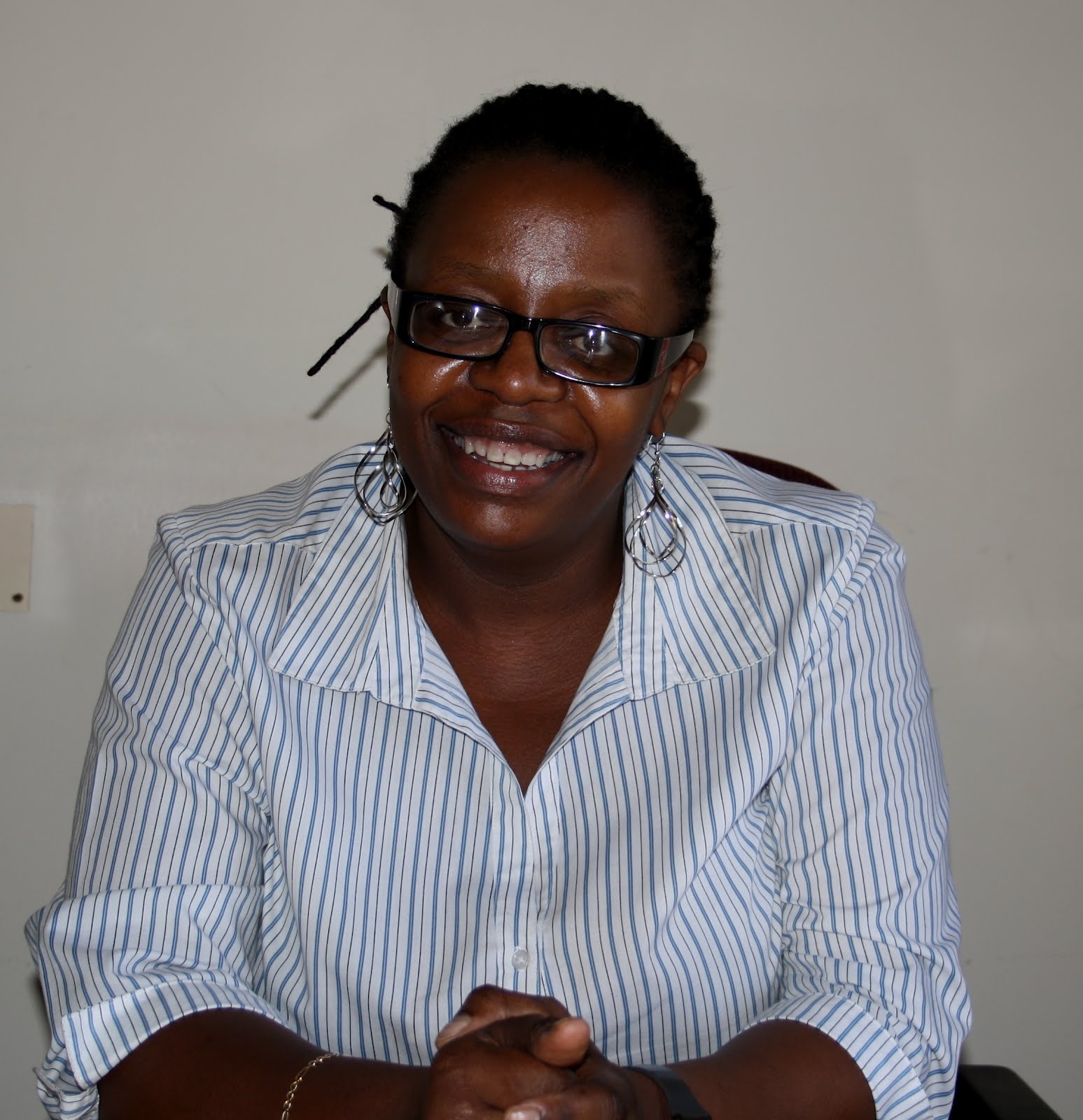 BY GRACE CHIRUMANZU
A bad asthma attack during her childhood each time
she tried to run, like the other kids of her age, could have took charge of her life and discouraged her to be the sportsperson she wished to be growing up in
Harare’s high-density suburb of Highfield.
But neither did asthma nor eczema pulled her down
from being the person she wanted to be in life, a self motivated chief executive of the Zimbabwe Olympic Committee (ZOC). Anna Mguni ignored the bad
aspect of her health to focus more on her strengths and this has seen her emerge as the boss of the country’s Olympic Games governing board.
“I was a very sickly child suffering from asthma and
eczema to the extent that doctors said I could not do any normal activities that requires exertion. Watching other kids knowing that if ever I start running my parents will say don’t run, don’t do this, you will cough; was just bad because I really wanted to be like other kids. I spent days in hospital and
even had a near death experience, it was just bad,” she recalls.
The negative comments about her seemingly peeling skin from eczema rather encouraged her to stand for who she was inside. She did not allow people to take away the courage in her.
“I also suffered from eczema and back then I was stigmatised; people would look at me strangely and ask what was wrong with my skin and what is going on? I grew up to be so defensive on whether why I wassick or why my skin had broken out. It really toughened me into realising that
there is a border line, that (sickness) is not really important –there are more important things to life than that,” she said.
Mguni, a single mother of two girls, who was appointed as the ZOC CEO following Stanley Mutoya’s resignation last November may have faced a jittery start to her new career faced with preparations for the high profile London 2012 Olympic Games set for July, but that has not been the case.
The former national basketball team and Real Returners star acknowledges the help of her two predecessors, Mutoya and Robert Mutsauki, who have assisted with a smooth flow of information and advice. She insisted that for women to be successful and take up decision-making positions in Zimbabwe, they need not challenge men but realise that it is their support
they need.
“We are not really challenging them (men) but we need their support for more women to end take up these decision-making posts,” said Mguni.
Being a woman at the helm of one of the country’s sports board, it is tempting for some people to quickly judge her as a potential failure after the Asiagate scandal unearthed by the media proved to have been masterminded by an allegedly corrupt fellow woman, Henrietta Rushwaya.
Mguni refuses to be painted with the same dirty brush.
“I see it as a challenge, we need to assist our men get over this cultural perspective because if it was a man they would not paint every man with the same brush so why do one have to do that because it is a woman?” she questioned.
“It is a difficult system to fight but we need to work through it by education and also by just being clean in our dealings. It is up to us the women in whatever profession we are in we need to be
professional. Otherwise we lose our credibility a lot faster than they (men) do.”
She has a traceable record as a sports administrator and her passion for the field can never be questioned. She captained her basketball and hockey team at High School and the team sport has taught her to work with others and learn from their ideas.
From a tricky childhood to teaching Geography at Vulindlela Secondary school in rural Matabeleland where there was no electricity, shortage of textbooks and having to extract all notes for students, Mguni realised how she was a source of information for her students.
She is proud to have been a teacher saying the experience taught her how to deal with people and groomed her into an innovative strong woman.
For the highs and lows that characterised her life, Mguni has so many lessons to learn from it. The most important lesson being that one “may be bad in some aspect of your life but it is certainly not everything about you that is bad. So, why not focus on the good.”
Her vision goes beyond the 2012 games in London as she hopes to “go further in sports administration and follow in the footsteps of Robert Mutsauki who is now with ANOCA and Tomy Sithole who is now with the IOC.”
Source: The Zimbabwean newspaper.
Friday, October 28, 2011
Pearl Thompson: Trains like a man, looks like a goddess
 BY GRACE CHIRUMANZU
Tough and strong is a typical description of men in African society. But 33-year-old Pearl Thompson has proved that women can also bear that description - without giving their beauty away for it.
Watching her flex her muscles at the recent Mr and Ms Pro-Fitness bodybuilding competition, where she came second, left many women intrigued by her audacity to plunge into such a male-dominated sport.
They must have thought to themselves, “why lose my feminine beauty for a man’s bulky body, all in the name of sport?”
Most beauty pageants around the world have preached the gospel of women’s beauty as something only possessed by skinny, tall women. Muscles have no place in these sermons unless it is a men’s chapter, but Thompson has proved that there are no limitations to a woman’s beauty.
The single mother to a four-year-old girl has looked and felt more beautiful since she started lifting weights back in 2009.
“Beauty starts from within, if you feel good inside then you feel beautiful. There is no point in having a beautiful face when you feel rubbish inside and it is difficult to feel that way when the body is not functioning well inside. That is why it is important for people to go to the gym or do some form of physical activity because the happy hormones are released when you do some form of exercise,” said Thompson.
“One can still be a fat woman and feel beautiful; they don’t have to be skinny to be beautiful.”
Thompson, who was born in Zambia, lived in Zimbabwe her whole life and started weightlifting after attending an inspiring bodybuilding contest in Harare about 12 years ago.
“I started my training with Otis Goredema who noticed at that time that I had an interest in the gym, he became my personal trainer and helped me win the Ms Zim competition in 2002. For the past four years I have been training with Givemore Marume and Kenny Guwa, they have really helped me by pushing me each time,” she said.
Thompson who once weighed 75kgs feels good at her current 65kgs.
“It is mainly about eating healthy; we don’t look like the body builders seen in other countries because here we don’t take supplements that boost our bodies. We just take a diet that allows the body to look like that,” Thompson explained.
“A lot of people are surprised to know that I do bodybuilding, but it is mainly because I still look like a woman.”
Despite deciding to come into the sport as a “hobby” and competing at some contests “just to support her gym” Thompson clinched her first prize at the 2002 edition of the Ms Zimbabwe bodybuilding contest, at the age of 24.
What makes her an inspiration is her ability to juggle her roles not just as a woman in a man’s world but as a single mother. She runs an Art and Craft Academy in Harare Milton Park. Thompson spends most of her time at the school as well as visiting the gym and making sure she spends quality time with her daughter.
“Mothers are not allowed to get tired,” she said.
They must have thought to themselves, “why lose my feminine beauty for a man’s bulky body, all in the name of sport?”
Most beauty pageants around the world have preached the gospel of women’s beauty as something only possessed by skinny, tall women. Muscles have no place in these sermons unless it is a men’s chapter, but Thompson has proved that there are no limitations to a woman’s beauty.
The single mother to a four-year-old girl has looked and felt more beautiful since she started lifting weights back in 2009.

“Beauty starts from within, if you feel good inside then you feel beautiful. There is no point in having a beautiful face when you feel rubbish inside and it is difficult to feel that way when the body is not functioning well inside. That is why it is important for people to go to the gym or do some form of physical activity because the happy hormones are released when you do some form of exercise,” said Thompson.
“One can still be a fat woman and feel beautiful; they don’t have to be skinny to be beautiful.”
Thompson, who was born in Zambia, lived in Zimbabwe her whole life and started weightlifting after attending an inspiring bodybuilding contest in Harare about 12 years ago.
“I started my training with Otis Goredema who noticed at that time that I had an interest in the gym, he became my personal trainer and helped me win the Ms Zim competition in 2002. For the past four years I have been training with Givemore Marume and Kenny Guwa, they have really helped me by pushing me each time,” she said.
Thompson who once weighed 75kgs feels good at her current 65kgs.
“It is mainly about eating healthy; we don’t look like the body builders seen in other countries because here we don’t take supplements that boost our bodies. We just take a diet that allows the body to look like that,” Thompson explained.
“A lot of people are surprised to know that I do bodybuilding, but it is mainly because I still look like a woman.”
Despite deciding to come into the sport as a “hobby” and competing at some contests “just to support her gym” Thompson clinched her first prize at the 2002 edition of the Ms Zimbabwe bodybuilding contest, at the age of 24.
What makes her an inspiration is her ability to juggle her roles not just as a woman in a man’s world but as a single mother. She runs an Art and Craft Academy in Harare Milton Park. Thompson spends most of her time at the school as well as visiting the gym and making sure she spends quality time with her daughter.
“Mothers are not allowed to get tired,” she said.
Wednesday, August 3, 2011
500 women armed with life skills

BY GRACE CHIRUMANZU
MACHEKE- Kunzwana Women’s Association (KWA) in collaboration with the British Embassy capped part of the 500 successful graduates from their Mationesa Training Centre in Macheke, last week as they continue to empower the unemployed rural woman with practical livelihood skills.
66 participants from the four constituencies, which included Chikomba East, Makoni North, West and South, went through various training under Kunzwana with the British Embassy funding from February to July.
According to the association’s executive director, Emmie Wade, 96 clubs were formed this year with a total number of 2 820 women attaining membership.
“It is unfortunate that at times we are actually turning women away; it is our wish to empower them all but sometimes we are limited by resources. When we went to Chikomba to recruit 66 women we found the compound filled with over 200 women who were hoping to take part. It is interesting to see how women in our country are hungry to learn,” she said.
The British Embassy second secretary Sarah Bennet added, “I used to be in the army and I know how it is like to be involved in a male dominated environment that is why I am so keen to champion women empowerment.”
“To see that we encounter poverty, we need to start appreciating women as equal partners of men. It is my hope that those graduating will one day be able to start their own businesses and generate an income for their families.”
Formed back in 1993, KWA was aimed at promoting and facilitating the social, economic and educational and cultural advancement of disadvantaged women, children and youth residing or working in farming communities.
This they have done by the establishment of effective working club networks, provision of information and training on life surviving skills such as carpentry, weaving, garment making, nutrition including organic farming, candle making, poultry, interior decoration, flower arrangements, pottery, tie and dye, food processing, shoe making, basket work among others.
This have seen many women rising from grass to being proud of their ability to contribute in providing for their families and gaining their men’s respect in recent years.
The Association began under a Mango tree at the residence of founding member Emma Mahlunge. She worked with three other women to have KWA registered and moved to the staff quarters at her house which was used as offices for four years.
The dedication of the founding team over the past 15 years has seen the Association grow to become a recognized development institution in Zimbabwe. These women volunteered and used their own resources to develop a framework that would help those less fortunate than they are.
The Founding team established club networks of not less than 10 women and not more than 30 women. These are now fully functional in Macheke, Kwekwe, Marirangwe, Tsunga, Nyamandlovu, Goromonzi and Muzurusani.
Mahlunge said, “This is meant to help women and have them help empower others. Women empowerment is wrongly interpreted by some men as a way of giving women the power to rule and disrespect them; but I encourage all women to sit down with their men and get them to sincerely understand what this is all about.”
“When we started this programme it was only targeted at women, but as we began to show progress men began to appreciate our work with some encouraging their women to join as others approached us to be members. We agreed that they will only take part in the courses but they will not take up positions within the association.”
KWA have since incorporated men within their training centers making it a bakery of empowerment for both men and women. But the majority of the participants remain the less privileged women.
Clarah Mhondo –Organic Farming; Chikomba East
I was a woman who knew I can help raise my family through farming, but my major worry was where I was going to get the money for the required fertilizers. My experience with Kunzwana’s project of organic farming wiped out all my worries when I got to learn that the unavailability of fertilizer cannot stop me from achieving what I want. It is just so amazing how I can use manure and ashes as a substitute. I am now earning up to $US65 a month from the sales of my crops and it is really something I could not get without this project. I’m always wondering where Kunzwana Women’s Association was all this time and I have no worries of any challenges that may come in future because I know they are here for us.
Future Majoni –Carpentry; Makoni South
The reason why I chose carpentry was because I just didn’t want to take up a course believed to be for women. I wanted something expected of men and prove that women can do it as well. I knew Kunzwana was here to take us out from rags to riches and I am happy that they have made a difference in my life. My first product was a chair and my husband found it difficult to believe that it was my own work that he thought I bought it somewhere. I have no worry of more visitors coming in now because I know I can make as many chairs as I want. I am proud that I can make a difference in my home and in my community.
Perpetua Mchichwa –Poultry; Makoni West
 We were very backward for sure; gossiping was what we knew best before we were empowered by Kunzwana. We used to do everything that we were taught back in our communities but before this training we just didn’t do it right. We practiced poultry but we didn’t have much knowledge about it. I never knew chickens need special care and they can also suffer from stress and get sick at times. I now know everything needed to make a good environment of keeping chickens and feeding them. My colleagues and I are now busy with our various projects with no time to waste in gossiping.
Pollar Mhondoro –Garment Making; Makoni North
I can easily admit that I was very backward before attending a Garment making training at Mationesa centre with Kunzwana. Today I am a different woman all together. I know I have the power to provide my family and my community with the best clothing. My biggest dream however is to supply schools in my community with uniforms because it does not make sense to have people from where I come from travelling to Harare for their children’s school uniforms. So, if my colleagues and I can be able to work towards that we would have helped others.
66 participants from the four constituencies, which included Chikomba East, Makoni North, West and South, went through various training under Kunzwana with the British Embassy funding from February to July.
According to the association’s executive director, Emmie Wade, 96 clubs were formed this year with a total number of 2 820 women attaining membership.
“It is unfortunate that at times we are actually turning women away; it is our wish to empower them all but sometimes we are limited by resources. When we went to Chikomba to recruit 66 women we found the compound filled with over 200 women who were hoping to take part. It is interesting to see how women in our country are hungry to learn,” she said.
The British Embassy second secretary Sarah Bennet added, “I used to be in the army and I know how it is like to be involved in a male dominated environment that is why I am so keen to champion women empowerment.”
“To see that we encounter poverty, we need to start appreciating women as equal partners of men. It is my hope that those graduating will one day be able to start their own businesses and generate an income for their families.”
Formed back in 1993, KWA was aimed at promoting and facilitating the social, economic and educational and cultural advancement of disadvantaged women, children and youth residing or working in farming communities.
This they have done by the establishment of effective working club networks, provision of information and training on life surviving skills such as carpentry, weaving, garment making, nutrition including organic farming, candle making, poultry, interior decoration, flower arrangements, pottery, tie and dye, food processing, shoe making, basket work among others.
This have seen many women rising from grass to being proud of their ability to contribute in providing for their families and gaining their men’s respect in recent years.
The Association began under a Mango tree at the residence of founding member Emma Mahlunge. She worked with three other women to have KWA registered and moved to the staff quarters at her house which was used as offices for four years.
The dedication of the founding team over the past 15 years has seen the Association grow to become a recognized development institution in Zimbabwe. These women volunteered and used their own resources to develop a framework that would help those less fortunate than they are.
The Founding team established club networks of not less than 10 women and not more than 30 women. These are now fully functional in Macheke, Kwekwe, Marirangwe, Tsunga, Nyamandlovu, Goromonzi and Muzurusani.
Mahlunge said, “This is meant to help women and have them help empower others. Women empowerment is wrongly interpreted by some men as a way of giving women the power to rule and disrespect them; but I encourage all women to sit down with their men and get them to sincerely understand what this is all about.”
“When we started this programme it was only targeted at women, but as we began to show progress men began to appreciate our work with some encouraging their women to join as others approached us to be members. We agreed that they will only take part in the courses but they will not take up positions within the association.”
KWA have since incorporated men within their training centers making it a bakery of empowerment for both men and women. But the majority of the participants remain the less privileged women.
Clarah
 Mhondo –Organic Farming; Chikomba East
I was a woman who knew I can help raise my family through farming, but my major worry was where I was going to get the money for the required fertilizers. My experience with Kunzwana’s project of organic farming wiped out all my worries when I got to learn that the unavailability of fertilizer cannot stop me from achieving what I want. It is just so amazing how I can use manure and ashes as a substitute. I am now earning up to $US65 a month from the sales of my crops and it is really something I could not get without this project. I’m always wondering where Kunzwana Women’s Association was all this time and I have no worries of any challenges that may come in future because I know they are here for us.
Future Majoni –Carpentry; Makoni South

The reason why I chose carpentry was because I just didn’t want to take up a course believed to be for women. I wanted something expected of men and prove that women can do it as well. I knew Kunzwana was here to take us out from rags to riches and I am happy that they have made a difference in my life. My first product was a chair and my husband found it difficult to believe that it was my own work that he thought I bought it somewhere. I have no worry of more visitors coming in now because I know I can make as many chairs as I want. I am proud that I can make a difference in my home and in my community.
Perpetua Mchichwa –Poultry; Makoni West
 We were very backward for sure; gossiping was what we knew best before we were empowered by Kunzwana. We used to do everything that we were taught back in our communities but before this training we just didn’t do it right. We practiced poultry but we didn’t have much knowledge about it. I never knew chickens need special care and they can also suffer from stress and get sick at times. I now know everything needed to make a good environment of keeping chickens and feeding them. My colleagues and I are now busy with our various projects with no time to waste in gossiping.
Pollar Mhondoro –Garment Making; Makoni North

I can easily admit that I was very backward before attending a Garment making training at Mationesa centre with Kunzwana. Today I am a different woman all together. I know I have the power to provide my family and my community with the best clothing. My biggest dream however is to supply schools in my community with uniforms because it does not make sense to have people from where I come from travelling to Harare for their children’s school uniforms. So, if my colleagues and I can be able to work towards that we would have helped others.
Subscribe to:
Posts (Atom)